



Author’s Note
I wrote this guide because outbound is evolving faster than most teams realise.
Every week, I’m working with SaaS companies trying to modernise their outbound and I keep seeing the same pattern: the tactics have changed, but the playbooks haven’t.
In the past year alone, I’ve partnered with more than 20 B2B SaaS companies and over 200 SDRs, from Series A startups building their first SDR motion to established Series D revenue teams running complex, multi-channel campaigns.
Across all of them, the same themes kept showing up:
- Reps are drowning in tools but starving for context.
- Outbound volume is up, but connection quality is down.
- Signals and automation are everywhere, yet few teams know how to turn them into meaningful conversations.
The insights and predictions in this guide come directly from that work, from sitting in on pipeline reviews, rewriting sequences, auditing CRMs, training SDRs and helping teams close the gap between strategy and execution.
It’s part reflection, part forecast. It’s a look at where outbound is heading and what the best teams are already doing differently.
If you’d like help improving your outbound system, whether that’s refining strategy, building better workflows, or training your team, you can book a call with me here.
Introduction
Let’s be honest…outbound isn’t getting easier.
Your SDRs are sending emails, leaving voicemails, and posting on LinkedIn, but the results don’t match the effort. Buyers are fatigued. Inboxes are flooded. And the old playbooks built on volume and vanity metrics are breaking faster than most teams can adapt.
The outbound landscape heading into 2026 looks completely different.
Deliverability is more fragile, tools have become overused and misunderstood, and “personalisation” has turned into automated flattery.
The result?
Reps are busier than ever but connecting less than ever.
It’s not that outbound doesn’t work…it’s that outbound done the old way doesn’t.
The teams who will win in 2026 aren’t sending more messages, they’re sending the right ones, at the right time, to the right people.
This is where the next evolution begins: signal-led outbound. A smarter, context-driven approach that aligns data, systems, and human insight.
The next era of growth belongs to companies who understand that timing now matters as much as targeting, and execution must be powered by both intelligence and empathy.
Here are my five predictions shaping what outbound will look like in 2026 and how the best teams are already preparing for it.
1. Outbound Becomes Signal-Led (But Sequences Still Matter)
The first major shift is philosophical. Outbound used to be linear: build a list, run a sequence, follow up. Now it’s dynamic and built around real-time buying signals.
Signals reflect change. A funding round, a new senior leader, or a tech stack expansion all represent a moment when a company is more open to conversation.
These signals identify the sliver of the market (roughly 3%) that’s ready to buy now. And 7% who intend to change.
And that’s powerful…but also limited.
Because 90% of your total addressable market isn’t in an active buying mode. If you only chase signals, you’re ignoring tomorrow’s pipeline.
 That’s why the strongest outbound engines will run on two parallel tracks:
- Signal-led outreach, where SDRs respond immediately to intent indicators.
- Problem-led sequences, where marketing and sales educate the rest of the market around key challenges, use cases, and value drivers.
Recently I’ve been attempting to map signals to Eugene Schwartz’s 5 Levels of Awareness (Unaware, Problem Aware, Solution Aware, Product Aware, and Most Aware). I’ll formulate my thoughts on this in the new year.
One of the biggest mistakes I see with sales organisations leveraging signals is that they treat it like a silver bullet and assume that signals alone are going to be what moves the needle for them.
But in fact, signals should be seen as a prioritisation forcing function. Have reps prioritise the signal-based campaigns before moving on to problem-led sequences.
How to take action
- Build a signal stack: Start small with 3-5 high-confidence signals (funding, leadership changes, job postings, tech adoption, or intent surges etc). Automate tracking using Clay, ZoomInfo, or first-party data in your CRM.
- Segment by buyer state: Create lists for “active demand” (signal-led) and “latent demand” (problem-led) so your SDRs always know who to contact and why.
- Refine message timing: Build a rule-based cadence…signal outreach happens within 24 hours, problem-based sequences run on a monthly rotation.
- Nurture dormant accounts: Use light-touch email or LinkedIn campaigns that keep your brand top of mind without pushing for a meeting.
When your outbound motion runs on timing, not volume, you stop interrupting and start intercepting.
Read more: Why Inbound, Outbound and Signals Must Work Together
2. The Rise of the GTM Engineer
Most outbound systems today are over-engineered and underperforming.
Reps spend more time managing tools, cleaning data, and updating CRMs than actually having conversations. That friction drains momentum, morale, and money.
Enter the “GTM Engineer” – the emerging role redefining how go-to-market teams operate in 2026.
You’ve probably seen the hype on LinkedIn or from Clay’s community (and yes, the term “Engineer” sparks debate).
But labels aside, this function solves a very real problem: the widening gap between strategy and execution in modern revenue teams.
Unlike RevOps, which historically focuses on infrastructure and reporting, GTM Engineers build systems that act.
They connect data, automation, and human behaviour into one seamless workflow. Eliminating repetitive tasks, unlocking visibility, and giving SDRs space to do what they do best: sell.
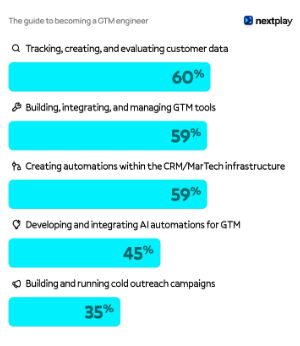
A GTM Engineer sits at the intersection of revenue operations, data engineering, and sales psychology.
They understand how to:
- Build enrichment and routing workflows in tools like Clay, Cargo, or HubSpot.
- Automate repetitive admin with platforms like n8n, Zapier, or AI agents.
- Write and test messaging frameworks that align with ICP, persona, and timing.
- Translate data into actions…not just dashboards.
They’re part builder, part strategist, and part behaviour designer. And it all reminds me of the early days of “Growth Hacking”.
And this role is already reshaping how top-performing teams operate.
How to take action:
- Define the Role Clearly: The GTM Engineer should own automation setup, data flow design, and process improvement…not pipeline ownership or coaching.
- Audit the SDR Workflow: Map the entire outbound process from data sourcing to CRM updates. Highlight every manual or repetitive step that can be automated without reducing quality.
- Automate Intelligently: Use AI for enrichment, routing, and reminders — but leave room for human discretion in research, messaging, and outreach tone.
- Build an Enablement Hub: Create a single workspace (e.g. Notion, Airtable, or Asana) where every playbook, signal, and message template lives. This eliminates confusion and keeps everyone aligned.
- Measure “Rep Friction”: Track how much time SDRs spend on non-revenue work. The lower that number, the higher their focus and motivation.
In 2026, outbound teams will win not by working harder, but by designing smarter systems around their people.
3. Cold Calling Makes a Comeback
As inboxes overflow and LinkedIn becomes noisier, voice is becoming the new differentiator again.
Cold calling is re-emerging as a relationship channel, not just a conversion tactic. The phone offers something email can’t replicate: real-time human feedback.
You can hear tone, pause, hesitation, curiosity, all data points that algorithms miss but skilled sellers can interpret instinctively.
There’s also a psychological element to this resurgence. When communication becomes fully digital, authenticity becomes scarce and scarcity drives value.
A live conversation signals effort, attention, and confidence.
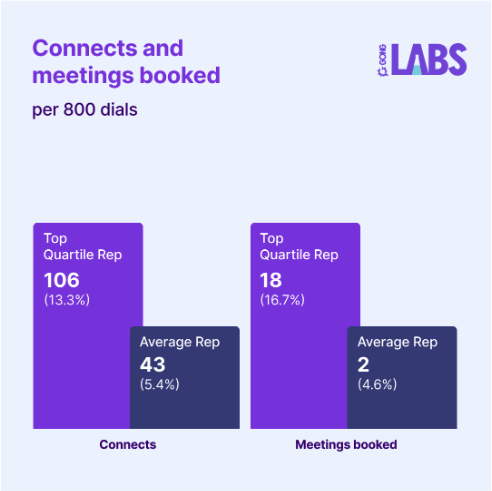 Cold calling also taps into the effort heuristic, we naturally value things that require effort. A well-timed, well-researched call cuts through the noise precisely because it feels personal.
But for this to work, teams must modernise their phone approach. It’s not about brute-force dial volume anymore.
It’s about context, timing, and tone.
How to take action:
- Refine your call list strategy: Use signals to prioritise who to call (funding, leadership change, product launches etc). Don’t waste dials on static lists.
- Invest in mobile accuracy: Adopt a mobile data scoring system that verifies recency and carrier type. Outbound teams live or die by data hygiene.
- Coach for conversational skill: Shift training from rigid scripts to active listening, empathy, and contextual questioning.
- Use call analysis wisely: Review AI-generated call transcripts for tone and pacing insights, but coach human nuance, not robotic perfection.
- Rethink your metrics: Measure meaningful connects and conversations, not just dial volume. Reward quality outcomes, not noise.
The companies that modernise cold calling will stand out precisely because most teams won’t have the courage to pick up the phone.
4. AI Drives Execution, Humans Drive Insight
AI is transforming sales operations. It can draft personalised emails, enrich data, prioritise accounts, and even summarise calls.
The temptation is to let it take over. But the best teams will resist that impulse.
This year, we’ve seen a number of examples where the promises of AI SDR’s fail to live up to the expectations. *Cough, 11X, cough*
AI should be used as a force multiplier, not a replacement. It excels at handling repetitive, rule-based tasks thus allowing humans to focus on insight, creativity, and persuasion.
The danger is that teams start mistaking output for understanding.
AI can predict when a prospect might be ready to buy, but it can’t read subtle human signals: frustration in tone, hesitation in phrasing, or excitement when you hit a nerve.
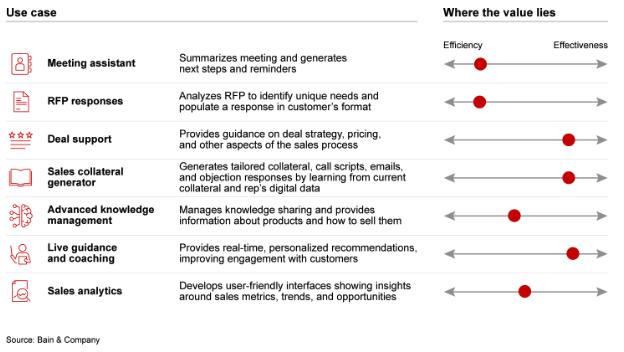
The future of outbound isn’t AI or humans, it’s both, working in balance.
AI creates scale.
Humans create trust.
How to take action:
- Map your AI workflow: Identify where automation genuinely adds value, like data cleanup, scheduling, enrichment, and content drafting. Keep human judgment in all final messaging and decision points.
- Build AI playbooks: Train your team on when and how to use AI. Encourage editing and ownership, not blind copy and pasting.
- Shift coaching focus: Teach SDRs to use AI as an assistant for research and prep, but always verify insights before outreach.
- Audit output quality regularly: Review a sample of AI-generated content each week for tone, accuracy, and message alignment.
- Balance scale with sensitivity: Use automation to go faster, but slow down at the moments that matter – discovery, follow-ups, negotiation.
AI removes repetition. Humans provide resonance.
The teams that understand that division of labour will lead the next era of outbound.
Read more: Why Generative AI is Underperforming in Sales (And How to Fix It)
5. ABM Goes Mainstream (and Affordable)
Account-Based Marketing used to be the domain of enterprise Marketing and Sales teams with deep pockets.
Now, thanks to lower costs and better integrations, ABM-style campaigns are within reach for mid-market SaaS companies too.
For example, you can create hundreds of 100% customised microsites using just Clay and Gamma for less than $200.
But the real shift isn’t in the tools, it’s in the mindset.
The future of outbound isn’t about pushing your message wider. It’s about educating deeper.
I like to use the following formula to bring ABM to life:
Account Insights × Persona Challenges × Value Proposition.
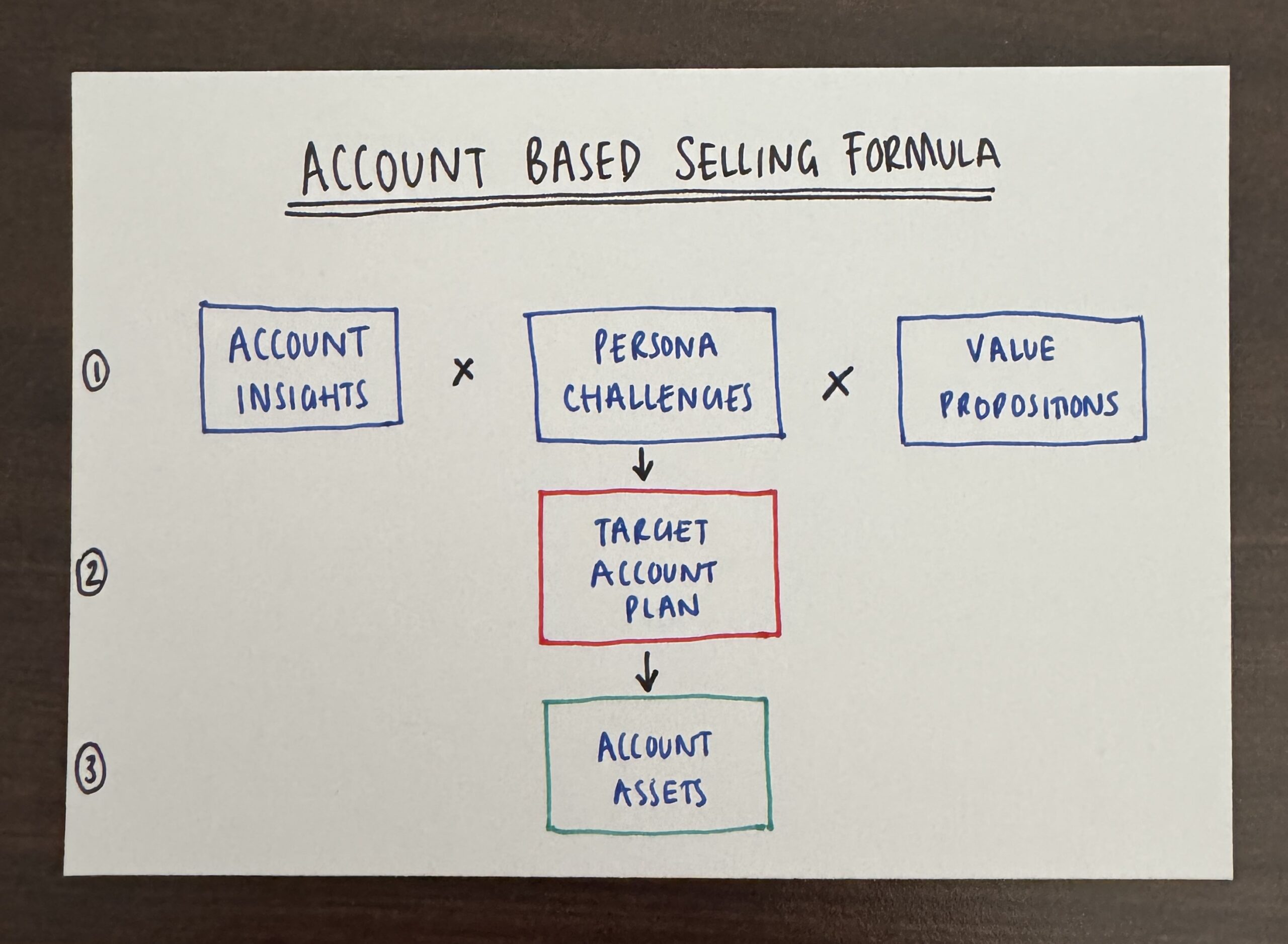
This combination ensures every campaign connects commercial relevance with human context.
When your team understands what’s happening inside the account (signals and intent), who’s feeling the pain (persona challenges), and how your solution creates value in their world, your outreach stops sounding like sales and starts sounding like insight.
ABM works because it mirrors how people build familiarity and trust. When prospects see consistent, relevant messages across multiple touchpoints, they feel known.
It’s the mere-exposure effect in action: the more familiar something becomes, the safer it feels to engage with.
The 2026 version of ABM won’t rely on lavish direct mail or expensive microsites. It’ll rely on tight orchestration between marketing and sales.
Marketing can now run ads at a contact level (and account level). SDRs follow up with personalised, context-rich outreach that references those same ideas.
This cohesion creates cognitive ease – buyers no longer have to “work” to connect the dots between brand and conversation. It just feels aligned.
How to take action:
- Start with a pilot: Choose 30-50 high-fit accounts and design an ABM program using tools like Influ2 (contact level ads), RevvedUp, Clay and Gamma.
- Create shared account profiles: Both SDRs and marketers should work from the same intelligence and follow the Account Insights × Persona Challenges × Value Proposition formula.
- Craft parallel narratives: Your outbound messaging should echo your ad themes and content topics. Familiarity compounds conversion.
- Incorporate low-cost creative plays: Simple tactics like personalised reports, printed insights, or low cost direct mail can make your brand stand out.
- Measure awareness lift, not just meetings: Track changes in engagement across the account – website visits, ad clicks, direct responses to capture the full ABM effect.
When marketing and sales align around education rather than interruption, you stop chasing leads and start building influence.
Read more: Account-Based Selling Done Right
The Future of Outbound Is Human Efficiency
Outbound in 2026 won’t be about sending more emails or running longer sequences.
It’ll be about aligning data, technology, and psychology to serve one goal: helping humans connect faster and with more relevance.
- Your SDRs won’t compete on volume. They’ll compete on timing and insight.
- Your GTM Engineers will remove the friction that slows them down.
- Your Marketing team will amplify their reach through education and familiarity.
- And your AI systems will handle the grunt work that used to bury them.
Outbound isn’t dying…it’s maturing.
And the next wave of growth will come from companies that embrace precision, empathy, and efficiency in equal measure.
If you’d like help improving your outbound system, whether that’s refining strategy, building better workflows, or training your team, you can book a call with me.